
NSI Publications
NSI Publications are publications from our professional and technical staff for research efforts sponsored by our government clients (e.g., SMA), conferences, academic journals and other forums.



Volume III in the SMA Perspectives Series “Emergent Issues for U.S. National Security”
Editors: Belinda Bragg, PhD (NSI, Inc.); Hriar Cabayan, PhD (Lawrence Livermore National Laboratory)
Editorial Board: Lt Gen (Ret) Robert Elder (George Mason University); Lt Gen (Ret) Timothy Fay, Robert Jones (USSOCOM), Robert Toguchi, PhD (USASOC)
Contributing Commands: USAFRICOM; USCENTCOM; USCYBERCOM; USEUCOM; USINDOPACOM; NORAD and USNORTHCOM; USSOCOM; USSOUTHCOM; USSPACECOM; USSTRATCOM
SMA Perspectives Publication Preview
In this report, entitled “Emerging Strategic & Geopolitical Challenges: Operational Implications for US Combatant Commands,” ten military Combatant Commands provide overviews of the challenges they face in their respective areas of responsibility (AORs) and how they plan to ameliorate the risks and maximize the opportunities that these challenges present. The report provides the Commands a platform to articulate how they plan to manage the multiplicity of challenges they face. By doing so, it helps identify the types of capabilities and activities the Services must be able to plan for and field in defense of US interests in a competitive future international environment.
The views expressed in this paper are those of the authors and do not reflect the official policy or position of the Department of Defense or the U.S. Government.
About the SMA Perspectives Series “Emergent Issues for U.S. National Security”
The Joint Staff and the United States military adhere to the maxim that effective strategy formulation starts with a proper diagnosis of the environment. This is particularly true when the operational environment has high levels of interactive complexity across various domains. In these settings there are no easy choices, but we know from centuries of experience that the best plans are informed by thoughtful, disciplined exploration of ideas and diversity of thought. In pursuit of this axiom, the volumes in the SMA Perspectives Series are a concerted effort to harvest the informed opinions of leading experts but do not represent the policies or positions of the U.S. government. Our hope is that the ideas presented in this series expand the readers’ strategic horizons and inform better strategic choices.
Volume I: Present and Future Challenges to Maintaining Balance Between Global Cooperation and Competition
Volume II: US versus China: Promoting ‘Constructive Competition’ to Avoid ‘Destructive Competition’
Volume IV: U.S. Command Perspectives on Campaigning in Support of Integrated Deterrence
Author: Popp, G. (NSI); Astorino-Courtois, A. (NSI); Bragg, B. (NSI)
Publication Preview
In August 2021, many of you participated in SMA’s inaugural Survey for Eliciting Expert Knowledge (SEEK) outreach. SEEK is SMA’s new, online capability for tapping into the collective knowledge, experience, and wisdom of our 5000+ person community of interest to generate crowdsourced insights on questions of interest. We conducted two surveys as part of this inaugural SEEK—one on deterrence and strategic stability, and a second on perceptions of threats and opportunities among US competitors. Perhaps surprisingly, we found:
- An overwhelming majority of respondents (79%) believe that some level of expansion of US nuclear force capability is necessary to maintain strategic stability among the US, Russia, and China into the future.
- 38% of respondents believe that the likelihood of US-China or US-Russia conflict with serious consideration of nuclear use falls within the range of quite possible to highly likely over the next 15 years.
- 36% of respondents believe that the likelihood of US vs. regional state conflict with serious consideration of nuclear use falls within the range of quite possible to highly likely over the next 15 years.brag

Author(s): Cutrona, S. (O. P. Jindal Global University); Rosen, J. (New Jersey City University); Lindquist, K. (NSI, Inc.)
Publication Preview
This article utilises logistic regression analysis to determine the factors that influence people from Mexico, El Salvador, and Guatemala deciding to flee to other countries. By broadening the traditional migration literature, we argue that organised crime, violence, and insecurity, not purely economic calculations, play a crucial role in one’s decision to emigrate to the U.S. Although concretely economic motivations, such as the household’s wage level, and social capital-related factors like having family ties in the destination country, are strong correlates in our models, we show that victimisation and fear of crime also affect the decision to live or work abroad. We contend that these factors are directly related to the presence of gangs and other criminal organisations in all three countries.
View Publication

Author(s): Rosen, J. (New Jersey City University); Cutrona, S. (O. P. Jindal Global University); Lindquist, K. (NSI, Inc.)
Publication Preview
This article evaluates the factors impacting support for tough on crime policies in El Salvador. Examining theoretical and empirical scholarly work, we look at how fear, together with social and political contexts drive public appetite for punitive policies towards criminals. We show that President Nayib Bukele is responding to public opinion and has implemented tough on crime policies at the expense of human rights violations and democratic institutions. Society favors candidates who are the “toughest” against criminal actors. Political candidates from all sides of the ideological spectrum tap into the fear of the populace to win votes, leading to punitive Darwinism. We provide an empirical assessment of which theoretically relevant factors are statistically associated with punitivism in the Salvadoran context, using multiple regression analysis of high-quality public opinion survey data from LAPOP.
View Publication

Volume II in the SMA Perspectives Series “Emergent Issues for U.S. National Security”
Editors: Lt. Gen. (Ret.) Robert Elder (George Mason University), Nicole (Peterson) Omundson (NSI, Inc.),
Belinda Bragg, PhD (NSI, Inc.)
Contributing Authors: Dr. Allison Astorino-Courtois (NSI, Inc.), Mr. Alex Campbell (LLNL), Dr. Zachary S. Davis (LLNL), Mr. Abraham M. Denmark (The Wilson Center), Lt. Gen. (Ret.) Robert Elder (George Mason University), Dr. Scott W. Harold (RAND Corporation), Mr. Mark Hoffman (Lockheed Martin), Mr. David Kirkpatrick (LLNL), Dr. Oriana Skylar Mastro (Maj, USAFR) (USINDOPACOM; Stanford University; AEI), Mr. Marshall Monroe (Marshall Monroe Magic; National Center for Soft Power Strategies), Lt. Gen. (Ret.) Jack Shanahan (USAF, Retired), Dr. Michael D. Swaine (Quincy Institute for Responsible Statecraft), Dr. Yi E. Yang (James Madison University)
SMA Perspectives Publication Preview
It is not an exaggeration to state that China is and will remain a significant challenge to the US on all aspects of national power for the foreseeable future. This situation has been in the making for quite some time. This SMA Perspectives paper will not delve into the historical roots of why the US got to where it is, however. Nor will it dwell on the purely military aspects of the conflict. These are important considerations that are amply discussed elsewhere in numerous scholarly publications. This SMA Perspectives paper is focused on the following question: “How should the US manage the US-China relations so that they stay below the level of conflict and destructive competition?” In this context, the paper distinguishes “constructive competition” from “destructive competition.” It is also a follow-on to a previously published paper, entitled “Present and Future Challenges to Maintaining Balance Between Global Cooperation and Competition.” The focus of the previous paper was on the conditions that encourage actors to act in ways that promote cooperation and avoid escalation to conflict. It offered a range of alternative actions that the US and/or another actor can take that will protect the vital interests of both. In the current SMA Perspectives paper, we apply this paradigm and the general insights from the previous paper to the US-China relationship specifically.
In the context of this SMA perspectives paper, “constructive competition” is a “state in which actors see their interests on a particular issue to be in some degree of non-threatening, non-damaging opposition.” It is “tolerable and productive,” and it is “the ideal mode in a dynamic global system, as it stimulates innovation and movement” (Astorino-Courtois, 2019; Astorino-Courtois, 2021). It assumes that the main actors can cooperate on common interests. It requires agreed upon norms or boundaries of accepted behavior and assumes that there is some degree of agreement between them. In this context, mutualism implies that both sides see the potential for gains.
“Destructive competition,” on the other hand,is a “state in which actors see their interests on a particular issueto be in opposition and potentially damaging to their respective interests. Tactics consistent with destructive competition can range in severity from international rules violations (e.g., stealing intellectual property) to actions seen as sufficiently harmful to necessitate shows of armed force to signal or demonstrate willingness to escalate. Thus, it is possible for two actors to be in a state of constructive competition on some issues and in a state of destructive competition on others” (Astorino-Courtois, 2019; Astorino-Courtois, 2021). In this context, the animosity between the actors is such that they are willing to undermine themselves to take the other down. It is also possible for destructive competition to interfere with constructive competition. This occurs when two actors’ interests do not align. In this context, it is assumed that the US and China will use all forms of competition to include selective use of direct confrontation and/or conflict when a state’s vital interests are at risk or perceived to be at risk.
Maintaining balance among competing interests in international security affairs is both a leadership and a management issue. Major leadership and management objectives include satisfying specific security objectives, while simultaneously 1) avoiding escalation (to the right) on the cooperation-competition-conflict continuum, 2) looking for opportunities to cooperate and compete constructively with long-time partners and competitors alike, and 3) retaining escalation control in the case of destructive competition and conflict. The ideal states are cooperation and constructive competition, given that US security objectives are met. Thus, the US objective would not necessarily be to “gain advantage,” particularly where cooperation better serves overall US interests. “Gaining advantage” implies asymmetry, which in and of itself is the foundation of destabilizing escalatory security spirals. Rather, the US objective would be to defend against disadvantage and seek to “create dilemmas for the adversary,” if these dilemmas would lead to cooperation or de-escalation, but not if the dilemmas would lead to destabilizing choice options. Key to all this is a viable risk management strategy.
There are wide differences in perception between the US and China (and other authoritarian governments) in terms of what is “acceptable” behavior in competition below armed conflict. Examples from China include forced technology transfer, economic and military espionage to fuel China’s military advantage (i.e., military-civilian fusion), influence operations, offensive cyber operations, biological attacks, and the use of non-traditional intelligence collectors. Some of these aspects are examined in this SMA Perspectives paper.
The US perspective of this competition with China is discussed by Lt Gen (Ret) Jack Shanahan, who proposes exchanging a single-note (specifically, containment) strategy for a five “C-note” scale—cooperate, compete, contest, confront, and conflict—to enable the US to tune its policy response to specific issues, approaching each on its merits and allowing progress to be made (or not be made) independently.
China’s perspective of US-China competition is discussed by four respective contributors:
- Dr. Michael D. Swaine argues that China is well aware that the US possesses huge advantages, both internal and through its allies and partners, that make conflict a risky strategy of dubious benefit.
- Dr. Scott W. Harold notes that the Chinese Communist Party has consistently framed the US as a threat to China’s interests and security, and this has enabled them at various times to promote a narrative that places the responsibility for regional tension and instability with “anti-China forces” within the US.
- Mr. Abraham M. Denmark notes that for China’s leadership, competition with the US is not an end in itself, but rather a necessary part of their effort to build an international system in which the CCP can achieve its own interests and objectives.
- Dr. Yi Edward Yang argues that China’s policies are both issue- and domain-dependent and, drawing on a broad literature, presents three models to explain various aspects of China’s behavior: the Social Identity Model, the Opportunistic Multilateralism Model, and the Centrality-Heterogeneity Model.
Other aspects of the US-China rivalry are addressed by several authors throughout the course of the paper:
- Dr. Zachary S. Davis and Mr. Marshall Monroe highlight the scope and purpose of the movie and media aspects of the CCP’s soft power crusade and propose several options for countering it.
- Mr. Alex Campbell and Mr. David Kirkpatrick advocate a regional cyber pact in the Indo-Pacific that suits the nature of cyber competition and builds on a unique American asset.
- Dr. Oriana Skylar Mastro states that the US must avoid relying on Cold War tools and strategies of competition. Instead, the US needs to demonstrate to its allies and partners that it can protect them not only from military attacks but against other costly behaviors that Beijing may enact against them, such as economic coercion or diplomatic isolation.
- Mr. Mark Hoffman argues that the nature of peer competition is in essence that of a complex adaptive system, and as such, insights and approaches from complexity management might be leveraged to help compensate for some of the asymmetric disadvantages endemic to the current adversarial peer competition.
Finally, in the closing chapter, Dr. Allison Astorino-Courtois attempts to bring all of the contributors’ insights together to provide a deeper understanding of the complexities of competition between the US and China.
The views expressed in this paper are those of the authors and do not reflect the official policy or position of the Department of Defense or the U.S. Government.
Watch the virtual discussion with the authors here.
About the SMA Perspectives Series “Emergent Issues for U.S. National Security”
The Joint Staff and the United States military adhere to the maxim that effective strategy formulation starts with a proper diagnosis of the environment. This is particularly true when the operational environment has high levels of interactive complexity across various domains. In these settings there are no easy choices, but we know from centuries of experience that the best plans are informed by thoughtful, disciplined exploration of ideas and diversity of thought. In pursuit of this axiom, the volumes in the SMA Perspectives Series are a concerted effort to harvest the informed opinions of leading experts but do not represent the policies or positions of the U.S. government. Our hope is that the ideas presented in this series expand the readers’ strategic horizons and inform better strategic choices.
Volume I: Present and Future Challenges to Maintaining Balance Between Global Cooperation and Competition
Volume III: Emerging Strategic & Geopolitical Challenges: Operational Implications for US Commands
Volume IV: U.S. Command Perspectives on Campaigning in Support of Integrated Deterrence
Authors: Dr. Lawrence Kuznar (NSI, Inc.) and Carl Hunt (US Army, Retired)
Invited Perspective Preview
This report supported SMA’s Integrating Information in Joint Operations (IIJO) project. For additional speaker sessions and project publications, please visit the IIJO project page.
We argue that the concept of escalation thresholds remains salient in national security and may be even more important than ever. However, the Cold War model is no longer useful given the multi-dimensional and complex nature of information in today’s world. We argue that escalation thresholds regarding information need to be conceived of in terms of complex systems. Qualitatively, analysts and decision makers must learn to intuit the dynamics of information in a complex world. Quantitatively, analysts must bring to bear complexity theory, and appropriate modeling and data collection. These changes have implications across the spectrum of activities that include doctrine, organization, training, materiel, leadership and education, personnel, facilities, and policy.
Authors: Dr. Allison Astorino-Courtois (NSI, Inc.) and George Popp (NSI, Inc.)
Summary Report Preview
This report supported SMA’s Integrating Information in Joint Operations (IIJO) project. For additional speaker sessions and project publications, please visit the IIJO project page.
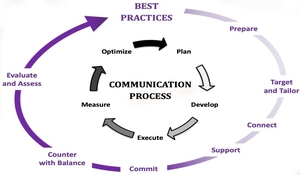
This report integrates key insights and lessons learned from the SMA IIJO effort about how those outside of the US government and military (i.e., non-government and private sector organizations) use messaging and communication to influence and inform. Ultimately, what emerges is a collection of best practices for effective communication. The source material for this report consists of final deliverables produced as part of the SMA IIJO effort. In particular, the findings presented in this report are largely built upon the integration of the work done as part of the IIJO Quick Looks and IIJO Virtual Think Tank (ViTTa) lines of effort.
Authors | Editors: Belinda Bragg (NSI, Inc.); George Popp (NSI, Inc.); and Allison Astorino-Courtois (NSI, Inc.)
This publication was released as part of the SMA project “Risk of Strategic Deterrence Failure.” For more information regarding this project, please click here.
Question of Focus
[Q8] What are key analytic approaches that USSTRATCOM planners might use to assess competitors’ behaviors, intentions, and capabilities holistically, including common and divergent national interests? Which are most appropriate for identifying the interrelationships among US and competitor interests and objectives, and for crafting strategies to counter those that undermine US interests and encourage those that satisfy US interests and objectives?
Report Preview
This Guide to Analytic Techniques, developed for SMA’s 2011 Concepts & Analysis Of Nuclear Strategy (CANS) project for USSTRATCOM, is offered in response to the following question from SMA’s 2021 Reachback Effort on Risk of Strategic Deterrence Failure.
What are key analytic approaches that USSTRATCOM planners might use to assess competitors’ behaviors, intentions, and capabilities holistically, including common and divergent national interests? Which are most appropriate for identifying the interrelationships among US and competitor interests and objectives, and for crafting strategies to counter those that undermine US interests and encourage those that satisfy US interests and objectives?
CANS was conducted by the SMA team at USSTRATCOM’s request to assess the utility of alternative analytic techniques for assessing nuclear force attributes and sufficiency under a variety of changed conditions. This guide is one of the CANS deliverables. It was a supplement to the “5D Framework” (named after the five dimensions of the operational context it specifies: policy objective, actor type, phase of conflict, threat, and the international political context) developed during this effort. Its purpose is to enhance deterrence planning and analysis by guiding analysts through the necessary steps for selecting appropriate alternate analytic techniques. The framework directs the analyst through a three-step process beginning with characterizing the issue or question of focus according to adversary, international, and US policy contexts.
This guide includes brief description of each technique, the resources required to implement the analysis, and the utility of the technique for deterrence-related analyses. The intent is not to guide application of each technique, but to provide an introduction thorough enough for a user to determine the utility and practicality of a technique. At the end of each description is a requirements section that discusses the data, time, tools, cost, skill set, and expertise required to implement such a technique. A coding scheme (see Appendix: Requirements Section Coding Specifications) was developed to provide users with a rapid way of comparing different techniques. Techniques selected for this report deal primarily with adversarial behaviors, intentions, and interests.
Authors: Alexa Courtney (Frontier Design); Jess Williams (Frontier Design)
SMA Report Preview
This report supported SMA’s Integrating Information in Joint Operations (IIJO) project. For additional speaker sessions and project publications, please visit the IIJO project page.
Abstract
Change is hard; it humbles us all. Yet, it is possible to succeed. This article explores the why, what, who and how of successful change initiatives. Despite wildly different organizational cultures in the U.S. Navy, Walt Disney, Major League Baseball teams, Police Departments, and in the technology and banking sectors, common practices employed by change champions yielded success. This article will demonstrate the importance of messaging change clearly, demonstrating how to live the change, aligning your people’s behaviors with new organizational values, using data to make change actionable and your organization accountable and cultivating strategic patience to sustain change initiatives over time. We hope this invited perspective provides confidence among the curious that, despite how difficult undertaking change is – and the many competing perspectives in the marketplace about how to do it well – this roadmap can set you up for success.
Introduction
The bad news: Attempting to change at any scale is hard. Change humbles: whether we seek healthier habits in our personal lives, are charged with implementing new strategies in our organizations, or take part in grass-roots social movements that aspire to create national impact, it eludes most everyone. Seventy percent of change management efforts fail. Up to forty percent of our lives are spent in auto- pilot mode, living and working based on previously formed habits. And yet, a recent Amazon search for change management best practices reveals well over a thousand books by leading academics, management consultants and practitioners such as Dr. John Kotter, Chip and Dan Heath, Edgar Schein, Gary Hamel, Dan Coyle and many others. They offer ways to be successful in change efforts. With myriad resources focused on different flavors of change management, it’s overwhelming to discern what works, why and how.
The good news: We can always count on change. In fact, “the only constant in life is change.” Given that, we should push ourselves, our organizations, and our communities to become better at it. But what does implementing change actually entail, and how will we know if we succeed?
This paper provides a brief exploration of effective change pathways, based on our interviews with change champions, change management scholars, and our many client projects focused on organizational transformation. We hope this invited perspective provides confidence among the curious that, despite how difficult it is to change and the many competing perspectives about how to do it well, it is possible to succeed. We will share key patterns about how change has been realized — for individuals, teams, and organizations at varying levels of scale. By “standing on the shoulders of giants” and heeding the hard-earned insights of change champions, we trust this paper will inform a roadmap for effective organizational change at scale.

Author: Dr. Belinda Bragg (NSI, Inc.)
Publication Preview
This report supported SMA’s Integrating Information in Joint Operations (IIJO) project. For additional speaker sessions and project publications, please visit the IIJO project page.
The objective of the Integrating Information into Joint Operations (IIJO) project is to assess the ways in which the Joint Force can most effectively integrate information1 into its activities across the competition-conflict continuum. During the course of this project, we have spoken to many people familiar with both Department of Defense (DOD) and Department of State (DOS) efforts to integrate information and shape the information environment (IE); their overall assessment has been remarkably consistent.2 Namely, information is playing an increasingly important role in states’ ability to protect and further their national interests, but the United States is not currently equipped or positioned to counter the scope and scale of our adversaries’ information activities.
However, there was also general consensus that if we improve our understanding of the IE and how our actions are perceived by populations (foreign and domestic as well as target audiences), we can proactively shape the environment and make the United States more competitive. Furthermore, if senior leaders and decision makers prioritize and fund information activities, agencies will be incentivized to integrate information across the planning process. In order to do either of these things, however, we need to improve our ability to monitor the IE and assess the informational effects of US actions. This requires the development of measures of effectiveness (MOEs) specifically designed to capture these informational effects—MOE(IE).
In order to examine the issue of MOE(IE) we organized a small, virtual workshop with three sessions. The goal for the workshop was to identify a set of basic guidelines for developing MOEs for information. Session 1 focused on conceptual-level issues, particularly what design principles can and cannot be carried over from assessment of kinetic effects. Session 2 built on Session 1, moving the discussion to consideration of the operational-level challenges to MOE development. Session 3 considered these combined findings in light of the challenges and opportunities presented by monitoring and assessment at the interagency level.