
SMA Publications
NSI maintains an extensive Publications archive of government-sponsored research and analysis products, various research efforts from our professional and technical staff, and a variety of corporate news items. The government-sponsored products are maintained on behalf of the US Department of Defense (DOD) Strategic Multilayer Assessment (SMA) program and address challenging national security problems and operational imperatives.


Author | Editor: Popp, G. (NSI, Inc).
The Senturion Modeling Project Noor video provides a brief overview of the Senturion modeling and simulation effort in support of the Strategic Multi-Layer Assessment (SMA) team’s Project Noor. For more information on Project Noor itself, please visit: Project Noor Video

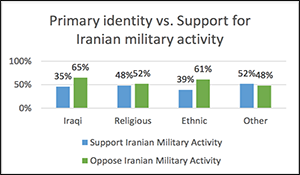
Question (R4.1): How Strong is Iraqi Nationalism in Countering Iranian Influence?
Author | Editor: Canna, S. (NSI, Inc.).
Executive Summary
History of Iraqi Nationalism
As with all newly formed Arab states following the conclusion of WWI, Iraq struggled to establish an inclusive national identity (Abouaoun, Dagher). Rooted in the Hashim monarchy’s attempts to preserve antiquated patrilineal lines, the rise of Saddam Hussein’s “national republic” in 1979 forcefully instituted a form of non-inclusive Arab nationalism. The success of the Iran-Iraq War (1980-1988) seemingly led to a resurgent rise of a fresh Iraqi nationalism although, in time, this proved to be limited to Iraq’s Sunni population1 (White). The US invasion of Iraq in 2003 once again exposed simmering sectarian tensions, in turn eroding Iraqi nationalism even more (Abouaoun). The establishment of a new Shia ruling elite (post-2003) sowed the seeds of Sunni Arab discontent in addition to opening the floodgates of increased Iranian influence (White). Non-state actors took advantage of the societal decay and positioned themselves as defenders of Iraq’s various sectarian communities (Abouaoun). Non-state actors, emboldened by globalization and the information revolution, were used as proxies by regional powers competing for influence in the region.
Can Iraqi Nationalism Counter Iranian Influence?
There is some consensus among contributors that Iraqi nationalism could be an effective tool to mitigate Iranian influence in Iraq. Today, as cautious optimism emerges from the downfall of ISIS, one recent poll found that 60% of Iraqis see themselves as Iraqis first (Kaltenthaler, Dagher). A significant majority of these nationalists (65%), oppose Iranian military intervention in Iraq against ISIS, and 63% support Coalition airstrikes against ISIS.
Some experts expressed limited optimism that Iraq is approaching an inflection point where the development of Iraqi nationalism can be achieved through competent governance; however, it is not clear how realistic this goal is, given the current climate. To understand this, let us review some of the drivers and buffers of Iraqi nationalism.
What Can Be Done to Foster Iraqi Nationalism?
If an increase of Iraqi nationalism is correlated with a reduction of Iran’s influence in Iraq, several experts note that steps could be taken to allow nationalist platforms to emerge.
First, experts stress the importance of reinforcing Iraqi state institutions, with a particular emphasis on the Iraqi military. As one of Iraq’s most effective institutions, the Iraqi military must lead the way on integration, professionalism, and freedom from corruption (Wahab).
Second, Iraqis need a new model of inclusive government (Abouaoun). He noted that, “a ‘spontaneous’ rebirth or boost of Iraqi national identity is a farfetched aspiration.” It can only be achieved through a process that generates a new governance model—only then can national identity mobilize Iraq’s Shias to minimize Iran’s influence in Iraq.
Third, strong and inclusive institutions must be supported by domestic and international efforts to build a stable, interconnected, and diversified economy (Wahab). This should begin with investment in the physical infrastructure that connects Iraqis across the country with one another as well as with economic opportunities (i.e., roads, railroads, pipelines, etc.).
Experts generally agree that rising Iraqi nationalism could play a critical role in countering Iran’s influence. However, nationalism is quite nascent in Iraq (Saeed) and not all experts agree that it currently exists in any significant way at all—let alone with enough strength to minimize Iran’s influence in Iraqi politics (Seloom).
Contributing Authors
Elie Abouaoun (United States Institute of Peace), Scott Atran (ARTIS), Munqith Dagher (IIACSS), Zana Gulmohamad (University of Sheffield), Karl Kaltenthaler (University of Akron/Case Western Reserve University), PiX Team (Tesla Government Services), Yerevan Saeed (Arab Gulf States Institute), Muhanad Seloom (Iraqi Centre for Strategic Studies), Bilal Wahab (Washington Institute for Near East Policy), Wayne White (Middle East Policy Council)

Author | Editor: Sutherlin, G. (GSI, Inc).
GSI’s geospatial relational database visualizes SMA data at a human scale supporting planners and CoA development. The relationships between the actors, groups, socio-cultural attributes and key events are shown as a geolocated network. This allows for navigation of physical and cognitive environments. SMA responses are modelled and compared as if/then scenarios.
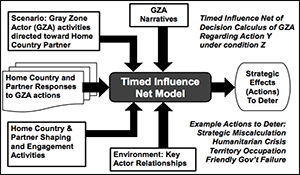
Author | Editor: Elder, R. (USAF, ret) & Levis, A. (George Mason University).
Abstract
Mapping political, security, societal and economic trends to the decision calculus of key regional and (as applicable) non-state actors has been used to gain insights into the behaviors of actors conducting multi- instrument operations in the “gray zone” between peace and conflict. Timed Influence Net (TIN) models have been used to identify potential sources of strategic risk, and serve as the foundation for a planning framework designed for use by operational planning teams to support operational and engagement planning by Combatant Commands and their components. Computational experiments were performed using the TIN models. The computational experiments focused on gray zone actor perceptions of the decision calculus to counter the effects of gray zone activities.

Question (R4.4): What does a successfully concluded campaign against ISIS look like? Considering costs, reputation, and balance of influence, how should the U.S./Coalition define success? Is the defeat of ISIS a success if it causes the balance of power in the region to shift towards Iran, Assad, or Russia?
Author | Editor: Hayes Ellis, D. (University of Maryland).
Executive Summary
Scoping “Success”
The responses provided to this question have either directly or implicitly pointed to a divide between what should be considered a “successfully concluded campaign against ISIS” in the operational theater in Syria and Iraq, versus at the global, strategic level. Standards for defining success on both levels tended to coalesce around similar benchmarks across all the responses.
Success at the Theater Operational Level
There is broad consensus among the respondents that a successfully concluded campaign against ISIS at the operational level, does not have to be defined by the total destruction of the group. Rather, a significant degradation of capabilities (particularly the ability to hold territory and the capacity to carry out extensive or highly lethal attacks), coupled with a reduction of the group’s threat to overall U.S. policy interests in the region, may be sufficient. Liebl offers that the total destruction of the group should be an aspirational goal, but acknowledges that this is unlikely in the near term and so success should be defined by different metrics. Braun suggests that the ISIS must be perceived as having been defeated to prevent the remnants from transmogrifying into some other virulent regional or global movement. Itani explicitly states that ISIS is an important threat at an operational level in Syria and Iraq; the danger is not existential to the US. Some respondents (Maye and Serwer for example) also noted the importance of creating stable circumstances for civilian populations, in the aftermath of a kinetic victory over ISIS and their subsequent loss of territory across the region. The challenges of this, particularly in avoiding redistribution of land and other assets away from the original owners, as well as avoiding the Iraqi perception that ISIS is being replaced by a hostile Shia regime, are well noted.
One point of divergence on specific metrics of degraded capabilities is based on the notion of organizational decapitation. Some responses (Lustick, Ligon, et al) make a case that success must include the elimination of ISIS leadership. Ligon and her colleagues make a more tactical argument, analyzing the data on the capacity of ISIS to carry out sophisticated and deadly attacks during times when the leadership is strong and organized, versus times when it is weak and in transition. Their analysis makes a compelling case that decapitation would severely hamper the operational effectiveness of whatever remained of ISIS forces. Other respondents raise doubts over the efficacy of a decapitation strategy noting that the targeted killing of many key militant leaders over the last sixteen years has not produced a long-term degradation of the threat (see Smith for example).
Success at the Strategic Level
“Successful elimination/destruction of Da’ish won’t occur in any conventional sense on the battlefield in Iraq, Syria or elsewhere,” writes Burki. In one sense or another, most of the respondents concur that strategic success against ISIS cannot be measured through the same lens as operational success in Syria and Iraq. Some authors (Ligon, Liebl, Lustick, and Burki for example) point to the ongoing capabilities of ISIS fragments and their tendency to recruit and embed themselves in Iraqi populations, in order to conduct ongoing social media strategies and to generally remain a presence on the global scene. They point out that the vast corpus of media and messaging already produced by ISIS can continue to radicalize individuals around the world and that their message may be just as focused on “martyrdom” as it was when they were highly successful on the battlefield.
An additional argument (Marten, Burki, and Anonymous) raises the prospect that at a strategic level, success against ISIS may not be a relevant concept as long as the overall concept of Salafi Jihad is not defeated. Strategic success in this view is less defined by the existence of the group itself and more by mitigating the circumstance that allow it to proliferate and thrive. The theme of the disenfranchisement of Sunni populations and the broader and more pressing struggle between Sunni and Shia forces in the MENA region, directly links to the rise of ISIS and other groups. These authors also tend to question the ability of the US to play a decisive role in achieving strategic success in this arena—casting much of the regional responsibility back to the local populations in conflict.
In looking at the big picture, Venturelli argues that success can be advanced through two strategies: 1) creating an integrated approach at the theater, strategic, and balance of power levels (Iran, Russia, Syria) and 2) focusing on the ‘exploitation’ of opportunities created by ISIS across these success components. This analysis rests on the belief that the situation in the Middle East presents opportunities to reshape MENA security and order and to mitigate challenges more effectively.
Is a Defeat of ISIS a “Success” if the Balance of Power Shifts to Favor Russia, Iran, or Assad?
Keeping with an orthodox view of US policy goals, the majority of respondents who addressed this sub- question indicate that a shift in the balance of power to favor Russia, Iran, or Assad, would undermine or negate the value of ‘defeating’ ISIS. Conversely a few contributors disagreed with that assessment, parsing the issues into very separate responses by actor, or disputing the validity of the question’s premise altogether.
The most in depth analysis (Itani) casts a post-ISIS state of play that sees an ascendant Iran as anathema to US interests; however, Russia is viewed as an actor that can more easily be accommodated in an acceptable regional framework. “Belei’s analysis views a post-ISIS future that favors Assad as a pessimistic scenario, but one which is very “likely.” Burki’s analysis rejects the entire premise of the sub-question and re-frames it from an operational space to a strategic one, stating that the relevance of the defeat of ISIS is not about a power vacuum in Syria, but rather its impact on the global trends in Salafi Jihadism—pulling us back to the point made above.
Contributing Authors
Anonymous 1, Bogdan Belei (Carnegie Endowment), Shireen Khan Burki (Independent), Aurel Braun (University of Toronto & Harvard University), Faysal Itani (Atlantic Council), Vern Liebl (Marine Corps University), Gina Ligon, Margaret Hall, Michael Logan, Clara Braun, and Samuel Church (University of Nebraska, Omaha), Kimberly Marten (Barnard College), Diane Maye (Embry-Riddle Aeronautical University), Ian Lustick (University of Pennsylvania), Pix Team (Tesla Government Services), Daniel Serwer (Johns Hopkins University), Janet Breslin Smith (Crosswinds Consulting), Martin Styszynski (Adam Mickiewicz University), Shalini Venturelli (American University)
Question (R5.5): How stable is the Gulf Cooperation Council (GCC), and to what extent can the United States rely on the GCC to influence foreign policy objectives in the region? What are the implications of the changing dynamics between GCC members?
Author | Editor: W. Aviles (NSI, Inc,).
Executive Summary
The Qatari crisis that is presently crippling the GCC has decayed logarithmically into diplomatic ultimatums and blockades, with Kuwait and Oman attempting to restore relations between Doha and the rest of the GCC. While the crisis has reached a relative standstill, the GCC is experiencing the “most severe test of the organization’s cohesion in its nearly forty-year history,” (Feierstein) and the entire affair calls into question the cohesion of the GCC and its potential to advance US interests. The GCC has been a fickle partner for US foreign policy objectives in the past and with political infighting and gridlock, Iranian encroachment, and a host of domestic issues, the GCC appears to be on the cusp of a historic transformation. All contributors in this report suggest that Iran is the primary cause of GCC discord and emphasize different causes and effects, as well as different paths of pursuing policy conducive to American interests.
Fractures within the GCC, which have flared several times since its inception in 1981, have resulted in the failure of the GCC to “make headway on major issues that touched upon sensitive areas of political, security, or foreign policy control,” Feierstein argues in agreement with several other contributors (Aviles, experts from the Global Cultural Knowledge Network [GCKN], Styszynski, and Ulrichsen). There are several factors that the authors note as the root cause for the GCC’s ineffectiveness besides Iranian antagonism. First, member nations disagree over the nature of political Islam vis-à-vis domestic presence and engagement of transnational religious groups (e.g., Muslim Brotherhood) and various elements of the Houthi rebel leadership (Feierstein). Second, economic disputes underpinned by “competitive bilateralism” and a lack of interdependency has produced a lack of economic cohesion (Ulrichsen). Third, the authoritarian and disparate natures of the Gulf regimes decay the integrity of the GCC union and discourage cooperation and make compromise difficult (Aviles).
Authors disagree about the permanence and depth of the fissures within the GCC. One school of thought suggests that the alienation of Qatar intentionally “intensified by the Saudis and Emirates” has permanently damaged the organization while others believe it has only been temporarily weakened (GCKN, Shaikh). A deeper discussion of the division within the GCC (with the UAE, Saudi Arabia, and Bahrain on one side, Qatar and Oman on the other with Kuwait in the middle) is a theme mentioned in a related SMA Reach Back response (R4.8)1 and is also discussed by Feierstein, Ulrichsen, and Aviles. These groupings are posited as a possible end state of the formal dissolution of GCC (Ulrichsen, Aviles) with Dr. Feierstein’s analysis even suggests such an outcome as possible if not likely. Regardless of the final result, all contributors agree that more turmoil is inevitable.
The Qatari crisis is seemingly a symptom of both the Sunni-Shia conflict and other regional/international politics, as well as the internal divisions that prevent the GCC efficiently resolving major disagreements. All of the aforementioned factors (and others) have ultimately created a less than desirable environment for US foreign policy. Several authors make the case for the GCC as being a poor partner for implementing US objectives in the region (GCKN, Feierstein, Serwer, and Aviles), with experts from the Global Cultural Knowledge Network going as far as contending that “America and the GCC do not have the same objectives so we can only influence the GCC through FMS [foreign military sales].” Ulrichsen and Aviles suggest that there is an opportunity to engage individual member states and elements therein, with Aviles criticizing the framework of diplomatic engagement with the GCC bloc instead of leveraging individual member states for foreign policy objectives.
Contributors
Weston Aviles, NSI; Global Cultural Knowledge Network, US ARMY TRADOC G2; Gerald Feierstein, Middle East Institute; Mubin Shaikh, Independent; Martin Styszynski, Adam Mickiewicz University (Poland); Daniel Serwer, Middle East Institute; Kristian Coates Ulrichsen, Rice University
Question: What internal factors would influence Iran’s decision to interfere with the free flow of commerce in the Strait of Hormuz or the Bab el Mandeb?
Author | Editor: Bragg, B. & Polansky (Pagano), S. (NSI, Inc).
Iran’s Strategic Interests
All of the SMEs either directly or indirectly referenced Iran’s strategic interests, and how these are informed by its overarching goal of regional hegemony. Dr. Belinda Bragg and Dr. Sabrina Pagano from NSI characterize these interests into three categories; prestige, economic; and security, all of which are moderated by domestic political constraints and pressures. Iran’s prestige interests center around ensuring that it does not lose face in its interactions with the US, and can increase its regional influence. Its economic interests focus on increasing Iran’s economic influence and security. Iran’s security interests include reducing threats from the US, Israel, and Kingdom of Saudi Arabia, reducing the threat from ISIL, and broadcasting strength and challenging US influence and position in the region. Its domestic constraints and pressures include resisting cultural infiltration from the west, delivering economic improvement, and broadcasting strength. Together, these interests, and Iran’s overarching regional hegemony goal (Guzansky; Bragg & Pagano), ultimately shape the strategies that Iran pursues, including its decisions regarding the Strait of Hormuz or the Bab el Mandeb.
Iranian naval capabilities and desire for regional hegemony
Dr. Yoel Guzansky, of the Hoover Institution at Stanford University and the Institute for National Security Studies at Tel Aviv University, discusses how Iranian strategic thinking on the sea is no longer limited to the Persian Gulf, but instead extends to intended naval bases in Syria and Yemen, as well as influence in the Red Sea or even the Atlantic—ultimately “making every effort to demonstrate that its naval power is not limited to the Gulf alone.” Guzansky further indicates that these are more than just aspirational statements; the Iranian Navy has already extended its reach to the Red Sea and Bab el Mandeb, as well as Pakistan, China, and South Africa. These developments are consistent with Bragg and Pagano’s assessment that developing and demonstrating military capability is a key security strategy for Iran, as well as being seen, by hardliners and conservatives in particular, as an integral part of their regional hegemony goal. Guzansky draws a similar conclusion, adding that greater naval power will also increase Iran’s ability to help its regional allies. However, he also notes that “[t]o do so, Iran will need vast resources it doesn’t yet have.”
Guzansky indicates that, historically, Iran has prioritized the development of asymmetric capabilities (including anti-ship missiles, mines, and small vessel swarms), to enable it to better confront the U.S. Navy in the Gulf. Iran can leverage these same capabilities, and others, to interfere with the flow of commerce in the Strait of Hormuz, and to a lesser extent, the Bab el Mandeb.
Internal factors influencing Iranian interference in the Strait or Bab el Mandeb
The contributors identified the following internal factors as potentially influencing Iranian actions in the Strait of Hormuz or Bab el Mandeb:
Iran’s revolutionary doctrine
- Frames Iran as involved in an existential fight against US imperialism
- Makes it critical for Iran’s leaders, particularly conservatives and hardliners, to demonstrate to the Iranian people that they will not be bullied by the US
- Supports and informs Iran’s goal of regional hegemony Domestic political competition
- The role of factions—conservative / hardliner; moderate/pragmatist—in the prioritization of Iranian interests and the preferred strategies for achieving these interests
- With an election coming up in May, conservatives have incentive to switch the domestic political focus from cooperation with the US toward confrontation, to both appease their base and put greater pressure on Rouhani
Economic conditions
- Slow pace of improvement following JCPOA leaves moderates such as Rouhani politically vulnerable, and creates the belief that their promised benefits of greater openness and cooperation were unrealistic
- As the salience of economic concerns wanes relative to prestige and security concerns for the Iranian public, there is a greater likelihood that leaders (both conservative and moderate) will employ more bellicose rhetoric with regard to the Strait of Hormuz
- Closing the Straits will have significant short-term negative economic consequences for Iran, and depending on international and US response, may have longer-term consequences for Iran such as the re-imposition of sanctions and loss of trade and foreign investment
- Given Iran’s current economic situation and growing dependence on oil exports, it is unlikely to take action to close the Strait or Bab el Mandeb, as doing so would harm their economic interest further and thus be self-defeating
Popular perception that the US is not living up to terms of JCPOA
- Plays into hardline and conservative narratives emphasizing Western (especially US) hostility and untrustworthiness, giving credence to their own economic strategy, which seeks to limit openness to the West
- Increases the likelihood that the balance between the economic costs of interfering with commerce in either the Strait of Hormuz or the Bab el Mandeb, and the perceived benefit of demonstrating Iranian power and status, may swing in favor of the latter
External factors influencing Iranian interference in the Strait or Bab el Mandeb
The contributors argue that external factors also play a role in Iran’s decision-making with respect to its activities at sea.
Competition with Saudi Arabia
- Saudi Arabia’s opening of naval bases in Djibouti and Eritrea affords it an advantage in the Red Sea area
- Iran may wish to do “more to limit the Saudis by pushing harder on the question of access/use of both straits” (Vatanka)
- Retaliation for Saudi’s restricting Iranian access to the SUMED pipeline and selectively blocking Iranian ships in the Bab el Mandeb, which has stifled Iran’s establishment of trade with Europe
- Iran has potential to weaken Saudi government domestically by disrupting oil revenues and thus creating the conditions for greater internal unrest and instability
- Iran’s support of the Houthis, including provision of supplies to which the Houthis already have access, may actually serve to signal to and threaten Saudi Arabia and demonstrate Iran’s reach
Use of proxies
- The “effective blockade on Yemen,” which Iran’s current naval capabilities cannot challenge, creates a barrier to Iran helping the Houthis
- The Houthis may not be particularly dependent on Iran, given that they already have many of the supplies it provides, and Iran is unlikely to provide additional forms of support
- Ultimately, “I don’t think the Houthis want their tail in the trap of the Iran-Saudi conflict anyways” (Ehteshami)
- Yemen imports 90% of its food, much of this using foreign shipping. Further reduction in security in the Bab el Mandeb would threaten this supply, and therefore is not in the interests of the Houthis.
US actions and rhetoric
- Reinforce the perception that the US acted dishonestly with regard to JCPOA, seeking to thwart Iran’s efforts to increase trade and foreign investment
- Given the current domestic political climate, both conservatives and hardliners, as well as moderates, have greater incentive to frame any US action relative to Iran as threatening and conflictual, rather than cooperative
Iran’s strategic calculus with respect to interference in the Strait of Hormuz
Alex Vatanka, an Iran scholar from the Middle East Institute, and Bragg and Pagano of NSI indicate that closing the Strait may in fact work against Iran’s own interests, since it is as dependent on oil moving through the Strait as are its rivals. In this way, Iran may gain more value from threatening to close the Strait, which may increase oil prices, than from actually closing the Strait, which is sure to result in retributive actions, most likely from the US. As Vatanka indicates, a continued US presence in the Strait all but guarantees that Iran will use this strategic lever sparingly, if at all. Both Guzansky and Pagano and Bragg suggest that factors enhancing Iran’s likelihood of plausible deniability (use of asymmetric methods or proxies), by reducing the expected costs of such action, may, if other interests are met, instead increase the likelihood that Iran will choose to interfere.
Iran’s strategic calculus with respect to interference in the Bab el Mandeb
The strategic calculus for Bab el Mandeb may be different, as Bragg and Pagano note. There are two issues to consider with respect to potential Iranian interference in the Bab el Mandeb. These relate to both its capability to interfere and its motivation to do so. At present, Iran’s degree of control over the Houthis is unclear, and thus its ability to exact precise control over their activities may be limited. However, if Iran’s continued support of the Houthis gains them greater influence, then we can expect that the present Houthi control over Yemen’s ports might translate into greater Iranian interference in the Bab el Mandeb, assuming appropriate motivation.
This is where the Iranian calculus for the Strait of Hormuz and the Bab el Mandeb may come to differ. If Iran continues to pivot its trade toward greater interaction with China, India, and Southeast Asia, it will become less dependent on commerce in the Bab el Mandeb. Ehteshami also indirectly provides some support for this conclusion, indicating that the Bab el Mandeb represents more of a security rather than economic interest to Iran. As Bragg and Pagano indicate, this trade pivot means that the Bab el Mandeb becomes less strategically important to Iran as a source of economic power, but more strategically useful to Iran as a source of economic and other manipulation of its perceived rivals, such as Saudi Arabia. Moreover, this is accomplished while making Iran less vulnerable to economic and other manipulation from its rivals through selective blocking of its own ships’ passage. Iran does not have the same alternatives in the Strait of Hormuz, and cannot decrease its dependence on an open Strait for sea transportation, critical to its economic well-being. In these ways, the strategic calculus in favor of Iranian interference in the Bab el Mandeb, but not the Strait of Hormuz, may come to evolve over time in favor of increasing interference or escalation. For the time being, however, as Guzansky notes, this may be a more distant reality, given some of the present limits of Iran’s naval force, including the effective blockade on Yemen that prevents Iran from accessing Yemen’s shores.
Despite these challenges, Iran’s focus on achieving and maintaining regional hegemony, and its naval and other actions toward this goal, should not be ignored. Iran is increasingly likely to pursue strategies such as new trade partnerships that minimize the harm that its rivals can inflict, as well as those that enable it to increasingly project power, whether through the use of proxies of otherwise. As Guzansky notes, “unless improved Iranian naval capabilities receive a proper response, Iran in the future will be able to threaten crucial shipping lanes, impose naval blockades, and land special forces on distant shores should it deem it necessary.”
Contributing Authors
Bragg, B. (NSI), Ehteshami, A. (Durham University), Guzansky, Y. (Hoover Institution, Stanford University, & Tel Aviv University); Pagano, S. (NSI); Vatanka, A. (Middle East Institute & Jamestown Foundation)
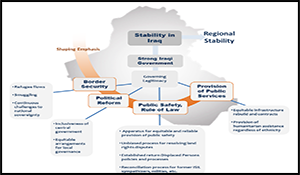
Question (LR1): What opportunities are there for USCENTCOM to shape a post-ISIL Iraq and regional security environment promoting greater stability?
Author | Editor: Astorino-Coutois, A. (NSI, Inc).
The expert contributors to this paper agree on the relationship between regional security and stability in Iraq: A strong and stable Iraqi government is a fundamental component of regional stability. The key to stability in Iraq is the popular legitimacy of central and local governance. Rather than operationally specific proposals, the experts suggest shaping objectives that USCENTOCM can use to prioritize and guide planning of shaping and engagement activities in four areas most critical for enhancing stability in Iraq: Political Reform Border Security, Public Safety, and Provision of Public Services. While USCENTCOM may take the lead in assisting Iraqis with issues such as border security and public safety, it likely would play a supporting role on the political and rule of law issues discussed below.
There is (uncharacteristic) agreement among international relations scholars on the factors that determine the stability of a state: 1) the extent to which it is seen as a legitimate governing authority by its population; 2) the degree to which the state has a monopoly on the use of force within its borders (i.e., internal sovereignty); and 3) the state’s ability to secure those borders (a component of external sovereignty).
Dr.’s Belinda Bragg and Sabrina Pagano of NSI use causal loops to illustrate the stability dynamics in Iraq and why it is impossible to ameliorate security concerns without also addressing the political and social factors that determine how people view the government. They write that in Iraq, “security is intrinsically linked to perceptions of governing legitimacy and the dynamics of ethno sectarian relations.” As a consequence, political reform that forges reconciliation between Shi’a and Sunni, and accommodates Kurdish and Arab desires for greater autonomy is an unavoidable prerequisite for a stable and legitimate Iraqi state. Similarly, Dr. Dianne Maye (Embry Riddle Aeronautical University) argues that encouraging local autonomy, decentralizing power out of Baghdad and structuring the government to avoid “concentration of power in any one ethnic, political, or religious group” are prerequisites for stability in Iraq. She recommends that the USCENTCOM should support work to shape the political environment in ways that promote “strong, yet dispersed, self-governance in a federal system” in Iraq that balances central government decision-making with the desire for increased autonomy in the provinces.
Security forces and police are often the most visible reflections of the domestic intentions and capability of the state. This is especially the case in a highly volatile security environment. In Iraq it is likely that a potent, locally appropriate but nationally coordinated security apparatus will be essential for implementing and assuring stability enhancing political reforms. USCENTCOM activities that encourage the capacity and help develop popular trust in the state’s security forces regardless of ethnic or sectarian divisions will be very important. The goal should be to shape Iraqi security activities to demonstrate the professionalism, impartiality and capacity of the security apparatus. The raison d’ etre of a government is to provide service to its citizens. When it is unable or unwilling to do so, it loses the trust of its constituents. Whenever possible and whenever it can be done fairly and impartially, the Government of Iraq, rather than sectarian security forces, Coalition forces, even NGOs should provide citizens with services such as public safety and policing, justice and reconciliation, humanitarian assistance and border control. This not only improves internal security and public safety but enhances the legitimacy of the government as well. While allowing non-NGO entities to provide local services may be expedient it is erode trust in the government and thus its longer-term ability to govern. When security forces are not seen as impartial and dependable protectors of all segments of society, more credible alternative sources of security will be found. This is precisely the context that facilitated ISIL’s rapid rise in Iraq.
Bragg and Pagano (NSI) recommend two ways in which USCENTCOM might help shape the situation. First, they suggest that USCENTCOM encourage consolidation of Iraqi security forces. This does not necessarily mean forging a single, central government tightly controlled national security organization, but that there is a single authority that sets the standards for national and regionally appropriate security forces. Second, encouraging recruitment of experienced Sunni officers – many of whom will be former Ba’athists – into the highest ranks of the Iraqi Security Forces and local police may help “alleviate fears that the process of removing ISIL forces will be used as cover for reprisals against Sunni populations … and as a means of bolstering Shia political and military dominance.” Failure to incorporate Sunni in leadership roles “increases the probability that Sunni tribal elders will look to provide their own security in the future” which will expand the number of sectarian militia and the number of security forces laying claims to authority.
Finally, John Collison of USSOCOM offers suggestions for promoting security prior to , and following the liberation of Mosul from ISIL. These efforts not only would help stabilize the volatile environment around Mosul but could serve as a template or set of precedents for post battle shaping in other areas of Iraq. In coordination with USG and Coalition partners USCENTCOM can engage with key military and militia leaders to help manage post liberation expectations and quell jockeying for political position, resources and territory among the groups operating in and around Mosul. Collison (USSOCOM) highlights two issues that demand particular and immediate attention: 1) the need to establish common understanding of the policies and procedures that will be used to return displaced persons to their homes in areas on able and equitable manner; and 2) articulation of reconciliation policies and procedures that will be used for those accused as ISIL sympathizers or having committed sectarian violence (e.g., screening process, arrest criteria, who would stand trial, etc.)
Contributing Authors
Bragg, B. (NSI), Pagano, S. (NSI), Gompert, D. (RAND), Collison, J. (USSOCOM), Maye, D. (Embry Riddle Aeronautical University)

White Paper on Bio-Psycho-Social Applications to Cognitive Engagement.
Author | Editor: Spitaletta, J. (Johns Hopkins University Applied Physics Laboratory).
The recently released White Paper entitled “Assessing and Anticipating Threats to US Security Interests: A Bio-Psycho-Social Science Approach for Understanding the Emergence of and Mitigating Violence and Terrorism” that Giordano discusses in the succeeding section provided a scientific perspective on current operations. The current White Paper provides operational perspectives on that and other relevant sciences. Previous versions outlined WHAT scientific approaches might be relevant; this iteration focuses on HOW to operationalize it.
The underlying concept of this paper is how bio-psycho-social approaches to cognitive engagement, described in greater depth by DeGennaro, may be put to use to collect, analyze, and/or apply information to meet a tactical, operational, or strategic end. This White Paper will focus on the proverbial “rubber meets the road” approaches of behavioral operations in the human domain where the former is “the study of attributes of human behavior and cognition that impact the design, management, and improvement of operating systems, and the study of the interaction between such attributes and operating systems and processes” and the latter is “the presence, activities (including transactions both physical and virtual), culture, social structure/organization, networks and relationships, motivation, intent, vulnerabilities, and capabilities of humans (single or groups) across all domains of the operational environment (Space, Air, Maritime, Ground, and Cyber).” Information Operations (IO) doctrine defines the cognitive domain as the component of the information environment (IE) that encompasses the gray matter of those who transmit, receive, and act upon information. Cognitive operations such as information processing, perception, judgment, and decision- making are the most vital aspect of the IE. Cognition is influenced by individual and cultural beliefs, norms, vulnerabilities, motivations, emotions, experiences, morals, education, mental health, identities, and ideologies and thus requires research and analysis methods from the bio-psycho-social sciences to understand and manipulate. When, how, and most importantly why to apply that understanding to US advantage at the tactical, operational, and strategic level is the focus of this effort.
The volume is focused primary on Military Information Support Operations (MISO), formerly Psychological Operations (PSYOP) as it is the activity that can most benefit from (and reciprocally impact) cognitive engagement. However, IO core capabilities such as Military Deception (MILDEC) and Computer Network Operations (CNO) information related capabilities such as counterintelligence (CI) could also benefit from bio-psycho-social applications to cognitive engagement.
To paraphrase Sir Basil Henry Liddell Hart, targeting the mind of the enemy commander is more important than the bodies of his troops (Hart, 1967), that recommendation can be extended to all those, belligerents and combatants alike, who comprise the human domain. The contemporary operating environment is growing increasingly contentious, however, the vast majority of those contentions do not necessarily require the use of lethal force. Instead, nuanced understanding of the nature of conflict and the peoples engaged are required to remain competitive. Cognitive engagement entails understanding the individual nodes with the human domain as such and developing appropriate methods for interacting with them. This White Paper is meant not only to continue the dialogue between the academic and operational communities but also to explore more deeply how to apply knowledge gained through bio-psycho-social research to cognitive engagement.
Contributing Authors
Bar, S. (Samuel Neaman Institute for National Policy Research), Baroni, S. (National Intelligence University), Bliner, E. (ForecastFwd), Bumphus, S. (NIU), DeGennaro, P. (TRADOC), Gerrol, S. (SPARK Experience), Giordano, J. (Georgetown University), Greenlee, M. (National Intelligence University), Holmes, B. (National Intelligence University), Jonas, A. (TRADOC), LaFon, D. (DOD), Lejeune, P. (International Institute for Non-Proliferation Studies), Linera, R. (USASOC), Mallory, A. (Iowa State University), Martin, M. (USASOC), McCulloh, I. (Johns Hopkins University), Munch, R. (TRADOC), O’Brien, C. (USASOC), Savage, S. (University of Cambridge), Romero, V. (IST Research), Seese, G. (USASOC), Spitaletta, J. (Joint Staff/J7 & Johns Hopkins University/Applied Physics Laboratory), Steckman, L. (Marine Corps Information Operations Center), Thomson, R. (Army Cyber Institute, United States Military Academy), Tovo, K. (USASOC), Vanderberg, N. (USASOC), Whalen, G. (DOD), Worret, C. (TRADOC), Wurzman, R. (University of Pennsylvania), Zak, P. (Center for Neuroeconomics Studies, Claremont Graduate University)
Question (LR5): Given the generational nature of the threats we face, what changes in organization, legislation, authorities, resources, infrastructure, education, and other areas should the USG make to become as agile, resilient, survivable, sustainable, technologically and intellectually dominant as required to protect our constitutional system and prevail in any conflict from the present until 2050?
Author | Editor: Holliday, R. (National Defense University).
The contributors to question LR 5 diverge widely on their recommendations for ensuring that the USG prevails in future conflicts, while also preserving the US constitutional system. The divergence is attributable to the breadth of the question, as well as the diversity of the contributors’ backgrounds.
The most common areas for improvement that arose from the contributions are:
- Refinement of the USG and military strategy making processes
- Emphasis on strategic communication to multiple audiences and through multiple channels
- Improvement of civilian and military operations prior to and during conflict
- Enhancement of capabilities for understanding varied operational environments
- Creation of new authorities and organizations to deal with fluid events as they develop
- Development of resource channels and education opportunities that empower decentralized action
The contributors’ recommendations are arranged in this report based on the original question’s categories of inquiry, which were: changes in organization, legislation, authorities, resources, infrastructure, and education; with the addition of two categories, risk calculation and strategy formation.
Due to the broad scope of the question, multiple contributors also encourage further exploration of the topics through deliberate networking and research in order to develop additional solutions.
The Projected Future Operational Environment
Among the contributors there is a general expectation that future military operations will increase in complexity, with a commiserate increase in requirements for information on the environment. Among the risks seen are the impacts of climate change, which as one contributor states, “will present more, more frequent, and more severe instances for the US to respond (or NOT). ” “These events will include humanitarian responses to severe weather events, as well as global crisis and conflicts…spawned by the effects of this change and variability.”
The assumed result by commentators is that the Joint Force will increasingly be required to engage globally. One concern raised with the expansion of DODs requirements is that a, “corresponding ‘militarization’ of foreign policy through the dominance of the military instrument of national power to address increasingly complex issues/problems/challenges, supplants the other departments/agencies constitutional and legal (i.e. FAA) roles and responsibilities.”
One contributor assumed that the creation of additional requirements is also likely to accompany an increase in the force being used to fill, “‘non-traditional’ roles due to our capacity and capabilities.” Another contributor believed that, “the increasing number of countries, cultures, and languages of interest,” in which DOD will be employed, will require the force to “focus on producing agile cultural generalists rather than stable long-term specialists.
Another contributor stated that the Joint Force will face resource limitations that impact its capacity to respond to events.6 This limitation was assumed to be partially offset by an increase in the US’s utilization of coalitions to achieve its desired end states for a range of different contingency scenarios.
One planning model was recommended in order to address these new challenges. The model states that future planning and engagement may be more fruitful if it is divided into Short, Medium, and Long-Term challenges. Short-term challenges consist of those that can be addressed between 2017 and 2021 under the current POM. Medium-term challenges consist of those between 2022 and 2030, which can be extrapolated based on current and newly identified trends. Long-term challenges are those between 2030 and 2050, which cannot be extrapolated based on current trends.8 This model was not incorporated into the current report, but may be useful as a stepping off point for future inquiries.
Contributors Recommendations
The contributors made several recommendations for improving the force’s ability to address the various aspects of Question LR 5.
Organization
One group of contributors asserted that increases in the complexity of problem sets, as well as greater demand for specialized subject matter expertise, can be partially mitigated by the creation of, “Standing Civilian-military teams or increased civilian-military teaming.” 9 Among the examples provided by the contributor was, “Provincial Reconstruction Teams (Afghan & Iraq); USSOF ‘teamed’ with FBI for sensitive site exploitation efforts; USSOF ‘teamed’ with USAID development representatives to assess local vulnerabilities and development (Afghanistan/Iraq); Conventional Force and Reserve elements ‘teamed’ with FBI and ISCTAP elements to support building partner law enforcement capabilities; and Conventional Force and Reserve elements ‘teamed’ with USDA elements to build agricultural capabilities in Afghanistan.”
Two other contributor strongly cautioned however that the future civilian-military teams must not be created from previous templates, without incorporating lessons learned from their past performance. Critiques on some of the above listed examples can be obtained through the Center for Complex Operations at the National Defense University.
Legislation
One contributors stated that, “alignment of DOD and DoS regional boundaries,” will also, “support agility and sustainability in ‘competition’, crisis, and conflict.” Their recommendation was, “aligning DoS Bureaus and desk areas of responsibility and GCC AORs to facilitate better opportunities to coordinate, align, synchronize and integrate programs, initiatives, activities, actions and operations in support of US interests, and discrete foreign policy objectives.”
The contributor went on to argue that interdepartmental conflicts may also be offset by the creation of, “Civilian-led JIATF (i.e. USAMB, POTUS Special Representative, other; ISO ‘competition short of armed conflict’) in order to support agility in engagement options.” In the contributors own words, the recommendation has not been, “fully analyzed and developed in terms of providing civilian leaders with traditional ‘command authority’ over military assets to address complex, multi-agency, and essentially non-military challenges, issues or threats over an extended period of time approximating an ‘integrated campaign’ effort.”
Authorities
One contributor’s recommendation is to develop, “a shared DoS and DOD authority to proactively build resilience and resistance with threatened partners.” Their assertion is that such an authority will enable the, “integration of instruments of national power earlier and more proactively.” 15 Once implemented, the authority would, “support broader USG engagement with partners to build resilience and resistance capabilities and capacity to overt or clandestine threats from another state actor, proxy, or non-state actor,” as well as “identify opportunities, threats and challenges early.”
Resources
The resource issues identified by contributors focused on the impact that centrally controlled resource distributions strategies have on developing agile organizations. One author contended that a, “deliberate efforts need to be made to empower leaders and soldiers in edge organizations that can obtain the most rapid feedback from the operating environment.” It was also recommended that senior leaders ensure junior leaders have access to the resources and time necessary to pursue self- initiated projects.
The same contributor stated that, “improvements in collection, processing, and dissemination of intelligence on sub-national and low-collection priority areas prior to conflict,” needs to take place. They also stated that based on current capabilities, new tradecraft must be developed that, “enable rapid in-depth understanding of populations, mobilization, and other human factors, using advanced analytic and data analysis methods.”
Infrastructure
One contributor argued that new organizational infrastructures must be developed with two goals in mind. First, “ensuring that whole-of-government and coalition participation supports a strategy as opposed to institutional equities and advancement within functional stovepipes,” and second, “managing continuity of effort over time.”
Another group of contributors recommended creating opportunities and incentives that are structured for specialists to, “develop and build long-term relationships with people in power, people coming into power, people who influence them, and people who may be able to advise and support the development of recommendations and Courses of Action (e.g., foreign partners, members of NGOs, etc.).”22 The contributor believe that these specialists should be developed to augment the current generalist mentality within DOD.
Education
One group of contributors stated that, “Defeating ISIL’s effective use of terrorism, media messaging, and inspiration and cooptation of lone wolf attacks, requires using modular means of national power – influence operations across diplomatic, economic, and social settings.” 23 Their recommended solution was the creation of “integrated, overlapping interagency working groups focused on core challenges and tasks in the Gray Zone.”
Another contributor recommended an alternate solution to terrorism messaging. Their assertion was that, “more nuanced audience analysis of different segments of target populations is necessary to determine how best to create and disseminate counter-messages to these different segments.” 25 This approach would allow for messaging to, “children in at-risk populations,” with the assumption that, “CENTCOM may have more success in stemming violent radicalization among that age group, thereby mitigating the possibility of ISIL-type ideologies from taking root in the young.”
Finally one contributor recommended that, “training and encouragement within the Joint Force to establish social networks prior to identification of tasks or missions, along with opportunities to mobilize social networks to achieve self-directed results,” will be important to developing a more agile force.
Other (Strategy)
One contributor recommended, “Improvements in the communication of strategic intent from principle level decision makers, to the Joint Force and interagency as a whole, in order to better empower subordinate organizations to plan and act in support of national objectives.”
Another contributor made specific recommendations on achieving that end state, stating the Joint Force needs to, “properly conceptualizing the nature of strategy,” “articulating a theory of change to guide strategy execution,” “developing a campaign specific strategy management office,” “clearly articulated goals and strategy that are agreed upon and understood by coalition partners.”
A final contributor stated that improving US strategy formation and communication needed to include: “increased coordination of mission specific pre-conflict authorities and authority requirements between the COCOMs, SECDEF, and the NSC; including identification, analysis, definition, and preparation for action along multiple contingencies.”
Other (Risk)
One contributor asserted that the Joint Force should, “realign its risk tolerances (balance of likelihood of failure, cost of failure, and benefits of success), in order to provide opportunities for breakthrough successes, at the cost more numerous failures.” The recommended approach was based on lessons learned in leadership from Silicon Valley. A group of contributors also recommended that, “anti-fragile” approaches can be used as alternative approaches to leadership, in order to encourage situation in which and people, “can more easily make small errors without failing.”
Contributing Authors
Braddock, K. (Pennsylvania State University), Bornmann, J. (MITRE-RAND), Collison, J. (SOCOM), Costa, B., MITRE-RAND, DeCamp, J. (MITRE-RAND), Holliday, R. (National Defense University), Meadows, S. (MITRE-RAND), Meredith, S. (National Defense University), Overton, M. (MITRE-RAND), White, N. (National Defense University), Williams, K. (MITRE-RAND)